
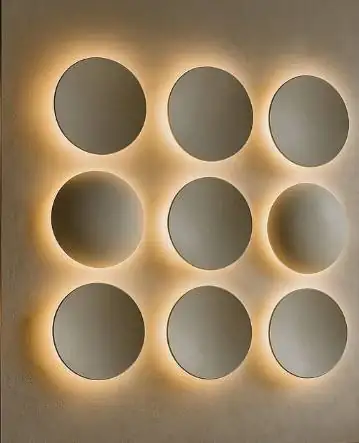
The expression of a surface does not come from the material alone. The direction of light, its distance from the surface and the surrounding space all shape how a material is perceived.
Texture, direction and shadow
Light falling close to a surface at a narrow angle reveals small changes in depth. The rhythm of relief, the depth of a line and the natural irregularities of a material become more apparent. Diffuse lighting produces a calmer reading, bringing tonal relationships forward. Lighting therefore deserves to be considered alongside the choice of material.
A sample in its spatial context
Examining a sample on a table differs from seeing it on a wall. Scale, orientation and changing daylight produce different readings. Where possible, materials should be reviewed in conditions close to their intended orientation, adjacent finishes and lighting scheme.
The detail behind the image
In concealed lighting, distance from the surface, shadow gaps and maintenance access matter alongside hiding the source. A considered detail accounts for fabrication, installation and continuity in use as well as the first visual impression.
An idea expressed in space.
Explore the work